Specialist childcare and early learning centre cleaning across Sydney — child-safe TGA-registered products, ACECQA-aligned protocols, police-checked and WWCC-cleared staff. Free quote within 24 hours.
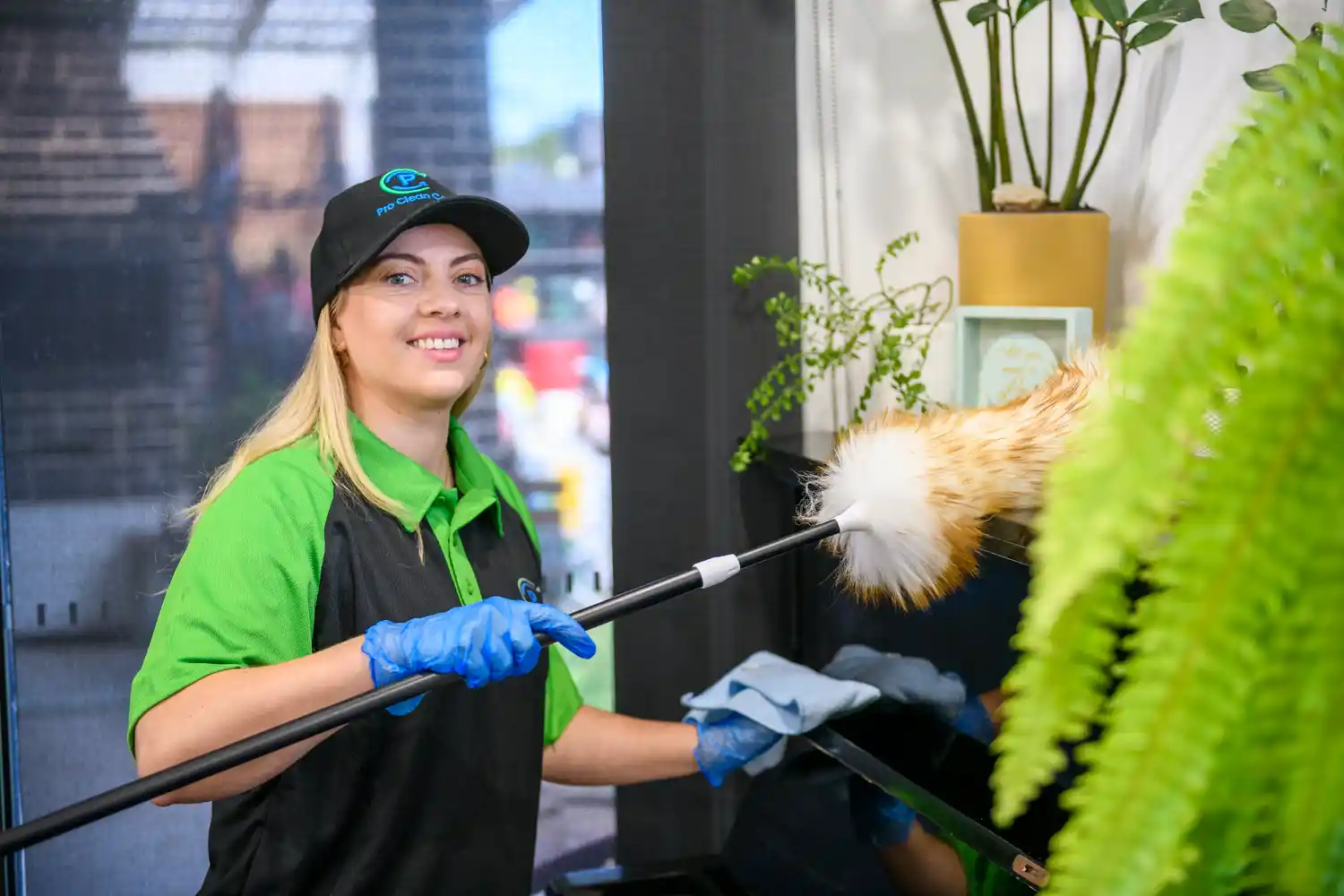
Childcare centres and early learning services are among the most hygiene-sensitive environments in any commercial cleaning portfolio. Children spend long hours in close contact with shared toys, furniture, and surfaces at the precise height for mouth contact — and infants and toddlers have developing immune systems with limited natural resistance to common pathogens. Pro Clean Corp provides specialist childcare centre cleaning services across all Sydney LGAs, using directly employed, WWCC-checked teams and infection control protocols specifically designed for early childhood education and care facilities.
Our cleaning programmes are aligned with the Education and Care Services National Regulations and the National Quality Standard — specifically Quality Area 2 (Children's Health and Safety) and Quality Area 3 (Physical Environment). We use only TGA-registered, non-toxic disinfectants, maintain full product documentation, and provide visit completion records suitable for licensing audits, ACECQA assessment visits, and your centre's Quality Improvement Plan. Whether you operate a council-run long day care, a privately-operated early learning centre, or a family day care coordination unit, our programmes are structured around your specific facility layout and regulatory obligations.
Cleaning documentation and service records aligned with NQS Quality Areas 2 and 3, supporting your Quality Improvement Plan and licensing audit requirements.
Non-toxic, hypoallergenic, TGA-registered disinfectants — free from bleach, harsh VOCs, and phthalates. Effective against pathogens relevant to early childhood settings.
All cleaners hold current Working With Children Checks as required by NSW law and have undergone police clearance screening before commencing any childcare site work.
Regular sanitisation rotation of all shared play items, cots, highchairs, climbing frames, and frequently handled equipment with correct dwell times for full efficacy.
Thorough disinfection of nappy change surfaces, disposal units, and adjacent areas on every visit using hospital-grade, child-safe disinfectants approved for infant contact zones.
Sleep room floor care, surface sanitisation, cot frame disinfection, and ventilation maintenance — keeping rest areas hygienic and safe for infants and toddlers every day.
Free on-site assessment at your centre. Written quote within 24 hours. No lock-in contracts.
1300 494 983Online EnquiryEvery zone in a childcare centre requires a specific cleaning approach. Here is what our teams deliver in each area on every scheduled visit.
“Childcare” covers four quite different operating models, and a cleaning programme copied from one to another will be wrong in predictable ways. Long day care runs eleven or twelve hours a day, fifty weeks a year, with infants in nappies and cots in the mix — the heaviest scope, five nights a week, with nappy change areas, cot rails, highchairs and bottle prep benches as the non-negotiable core. Preschool and kindergarten services usually operate school terms only, with older children out of nappies, which shifts weight away from change areas and onto craft residue, floor surfaces, bathrooms and a heavier term-break deep clean. OSHC programmes typically occupy a shared school hall for a few hours either side of the school day, so the job is a fast turnaround between the school's own cleaning contract and the next morning — coordination with the school cleaner matters more than scope size. Family day care coordination units are essentially small offices with a toy library attached, and their real requirement is equipment sanitisation between loans.
This boundary is worth writing down at the start of a contract, because when it is left implicit both sides assume the other is handling it. Educators handle in-the-moment hygiene during the session — nappy change surface disinfection after each change, wiping tables before and after meals, immediate spill and toileting-accident response, and bagging soiled linen. That work is part of your health and hygiene policy under Regulation 77 and it cannot be outsourced to an evening visit. Our scope starts after the last child leaves: the full floor, bathroom and change-area disinfection, kitchen and bottle prep, sleep rooms, staff areas, entry glass and reception, waste, plus the scheduled rotation of toys, soft furnishings and equipment.
Two grey areas cause most friction: toy washing, which is either a rostered educator task, a contractor task, or nobody's task; and laundry of sleep bags, cot linen and dress-ups. We will take either or both, but they should appear in the scope document with a stated frequency rather than being assumed. Where a room leader wants a specific item excluded — a sensory tray, a delicate display, a child's comfort item — we tag it and leave it alone.
Beyond the nightly visit, a childcare centre needs a periodic calendar: carpet extraction in rest and reading areas, vinyl strip-and-seal or burnish, high dusting and light diffusers, blind and curtain cleaning, exterior window cleaning, outdoor deck and soft-fall pressure washing, and a full toy and equipment sanitisation cycle. Term breaks and the end-of-year shutdown are the natural windows for the disruptive items, and booking them against dates at contract start is the only reliable way to ensure they happen. Separately, outbreak response — gastro, hand-foot-and-mouth, rotavirus, or a notifiable illness — should be a pre-agreed protocol with the products already on the shelf, so a call at 3pm produces a crew that evening rather than a discussion about scope.
Element 2.1.2 of the National Quality Standard requires that effective illness and injury management and hygiene practices are promoted and implemented. Cleaning is the largest single contributor to that element, and it is also where services most often lose marks — not because the centre is dirty, but because nothing on file proves what was done, when, with what product, and by whom. An authorised officer assessing Quality Area 2 is looking for a documented system, not a clean floor on the day of the visit.
There are five things worth having in the folder before an assessment and rating visit. First, a written cleaning schedule that names each area, the task, the frequency and who is responsible — the educator or the contractor — so the boundary between in-session hygiene and after-hours cleaning is explicit rather than assumed. Second, attendance and completion records for each visit, dated and signed, which is what turns your schedule from an intention into evidence. Third, current safety data sheets and product labels for every chemical held on site, along with the contact time each disinfectant requires, since a product wiped off before its label dwell time has not disinfected anything. Fourth, evidence of chemical storage and handling — locked, out of reach, in original labelled containers. Fifth, current Working With Children Checks and police clearances for every person who enters the building.
Two further items are worth holding even though they are not asked for at every visit. A written outbreak response protocol, agreed with your cleaner before an outbreak rather than during one, demonstrates that your response to a gastro or hand-foot-and-mouth event was planned rather than improvised, and the attendance records from that response show it was carried out. And a periodic calendar — carpet extraction, hard floor strip and seal, high dusting, blind and light diffuser cleaning, outdoor soft-fall washing — with dates against each item shows a maintenance cycle rather than a reactive one.
Pro Clean Corp supplies all of this as part of the service rather than on request: a scope document written per room, a completion record after every attendance, product documentation kept current, and staff clearance copies available to your director at any time. It is formatted to be attached directly to your Quality Improvement Plan, which is the point at which most directors stop having to rebuild the evidence themselves the week before an assessment.
A specification is not a task list — it is the method, the product and the frequency behind each task. These are the standards our crews work to in each room, and the detail we write into a scope document so a director can hold us to it.
Everything in a nursery is assessed on the assumption that an infant will mouth it. Cot frames, rails and mattress covers are disinfected with a product safe for infant contact zones and left to air rather than being wiped dry immediately, so the contact time is actually achieved. Floors are the primary surface here because non-walking infants spend the day on them, so they are disinfected rather than damp-mopped, with a separate mop head that is never used in a bathroom. Bouncers, rockers, play mats and low shelving are wiped every visit; soft furnishings, cushion covers and sleep bags go on a laundering rotation written into the scope with a stated frequency. Air vents and window tracks are on the periodic cycle. No fragranced product is used in a sleep space.
This is the highest-risk area in the building and the one an assessor looks at first. Change mats, the bench surround, the adjacent hand basin and taps, the nappy bin exterior and lid, and the step or stool are disinfected with hospital-grade, child-safe product held for its full label contact time. Colour-coded cloths and mops are used here and nowhere else, which is the single most effective control against carrying contamination into a food or sleep area. Floors are disinfected wall to wall, including behind the bin and under the change unit where soil accumulates out of sight. Child toilets, cisterns, seats, flush buttons, basins and step stools are done individually rather than sprayed as a block, and soap and paper are restocked before they run out rather than when someone reports them empty.
These rooms produce more mess and less risk than the nursery, so the emphasis shifts to residue and reset. Craft materials leave glue, paint, glitter and clay on tables, chairs, floors and skirting, and if that is left it hardens and becomes a scraping job within a week. Tables and chair frames are wiped every visit including the underside edges children grip, and the floor is machine or hand cleaned to lift set residue rather than smeared over it. Shared equipment goes on a documented sanitisation rotation so every item comes round on a known cycle rather than only the ones sitting in the open. Book corners, dress-up boxes and sensory trays are cleaned around unless the room leader has asked otherwise, and anything tagged by an educator as not to be touched is left exactly where it is.
A childcare kitchen is a food premises and is cleaned to that standard, not to a staff-room standard. Food contact benches, the sink and splashback, the dishwasher door and seal, appliance exteriors, the fridge and freezer seals and handles, and the floor including the waste gully are done every visit with food-safe chemistry and dedicated equipment that never crosses into an amenity area. Bottle preparation areas — bench, steriliser exterior, bottle warmer, kettle base and the storage shelf above — are treated as their own zone because they serve infants. Bins are emptied, the bin body itself washed on a stated frequency rather than only relined, and the exhaust filter and canopy are quoted as a scheduled periodic item alongside our commercial kitchen cleaning team where a centre cooks on site.
Outdoor areas are the part of the service most often left out of a cleaning contract and the part most likely to generate a parent complaint. Hard play surfaces, decking and pathways are swept and washed on a stated cycle, and soft-fall rubber and synthetic grass are pressure washed periodically because organic matter and spilled food feed a black biofilm in the surface. Climbing frames, slides, cubby houses, handrails, water play equipment and outdoor tables are wiped down on the same rotation as indoor equipment. Sandpits are raked and inspected for foreign material, with covers checked and cleaned, and sand replacement or turning scheduled as a periodic item. Verandah roofs, gutter lines above play areas, bin stores and outdoor taps are on the same calendar as indoor high-level work, alongside carpet extraction in the indoor rest and reading areas.
Childcare centre cleaning includes daily sanitisation of all rooms children access — playrooms, sleep rooms, nappy change areas, bathrooms, kitchen and food preparation areas, corridors, and outdoor play areas where applicable. High-touch surfaces including toys, furniture, climbing frames, cots, highchairs, and shared equipment are sanitised on every visit using TGA-registered, child-safe, non-toxic disinfectants. We maintain correct product dwell times for full antimicrobial efficacy and provide visit completion records suitable for regulatory audits and your Quality Improvement Plan.
Yes. Pro Clean Corp uses only TGA-registered, hypoallergenic, non-toxic disinfectants across all childcare environments. Our products are specifically selected to be free from harsh volatile compounds, concentrated bleach, phthalates, and strong fragrances that are unsafe around infants and young children. Products are highly effective against pathogens relevant to early childhood settings — including norovirus, rotavirus, and common respiratory bacteria — while leaving no harmful residues. Safety data sheets for all products are available for review by your centre director or licensing authority on request.
Yes. All Pro Clean Corp staff assigned to childcare centre cleaning contracts hold valid Working With Children Checks (WWCC) as required by the Child Protection (Working with Children) Act 2012 NSW. Staff are also police-checked and trained in the professional conduct standards required in licensed early childhood education and care environments. We maintain and update all clearance documentation on a rolling basis and can provide copies of clearances to your centre director at any time.
Yes. Pro Clean Corp services both council-operated and privately-operated childcare centres and early learning services across Greater Sydney. We are familiar with the additional contractor compliance requirements that apply to council facilities, including council-specific induction procedures, insurance requirements, and cleaning standards aligned with local government procurement policies. Our teams hold $20M public liability insurance and all required staff clearances applicable to child-occupied council premises.
The cost of professional childcare centre cleaning depends on the size of your centre, the number of rooms and outdoor areas, your required cleaning frequency, and the specific services included in your programme. Most childcare centres are serviced five days per week with an after-hours programme. We provide a free on-site assessment and a detailed written quote within 24 hours of visiting your centre — itemised by area and service so your director or administrator can review costs clearly. Call 1300 494 983 to arrange your assessment.
Call 1300 494 983 or submit an enquiry via our contact page. We will arrange a free on-site assessment at your centre at a time that suits your team, assess all areas and service requirements, and provide a written quote within 24 hours. There are no lock-in contracts — our childcare cleaning programmes are structured around your operational needs with the flexibility to adjust service frequency and scope as your centre grows or changes.
Both, at different points. Educators handle in-session hygiene: nappy change surface disinfection after every change, table wipe-down before and after meals, immediate response to spills and toileting accidents, and bagging soiled linen. That sits inside your own health and hygiene policy under Regulation 77 and cannot be deferred to an evening visit. Our scope begins after the last child is collected and covers the full floor, bathroom and change-area disinfection, kitchen and bottle preparation areas, sleep rooms, staff areas, entry glass, waste, and the scheduled rotation of toys and soft furnishings. We recommend writing that boundary into the scope document at the outset, because the tasks that get missed are always the ones each side assumed the other had.
Yes, and it works far better when the protocol is agreed before you need it. During an outbreak the requirement shifts to more frequent cleaning of high-touch surfaces and toys, with a product appropriate to the organism held for its full label contact time — a routine wipe-down does not clear these pathogens from surfaces. We keep the correct products and an agreed room sequence on file for each centre we service, so a call during the afternoon can put a crew on site that evening rather than starting a conversation about scope and pricing. Outbreak attendances are documented separately in your service records, which is useful evidence if you need to demonstrate your response to a parent, your approved provider, or NSW Health.
We service long day care centres, early learning services, and kindergartens across Greater Sydney. Find your local childcare cleaning service:
ACECQA-aligned protocols, TGA-registered child-safe products, and 100% WWCC-cleared teams keeping Sydney childcare centres clean, safe, and compliant every operating day.
Serving council-run and privately-operated early learning centres across all Sydney LGAs. Free on-site assessment and written quote within 24 hours.
Related Guides
These guides help childcare directors, centre managers, and educators understand sanitisation, infection control, and professional cleaning standards for childcare environments.